
The Future of Events
5 min read
Sakari Nisula

The future of events — rising trends to know
The world is changing, and so is the events industry. Technological development, societal shifts, and evolving human preferences are reshaping how events are planned, produced, and experienced. The pandemic forced the industry to pause and experiment with new digital and hybrid formats, many of which have become a permanent part of how we work. At the same time, it revealed something essential: virtual meetings cannot fully replace face-to-face encounters. When people go to events, they want experiences, to meet others, and to be part of something shared.
Several forces of change are shaping the events industry at once — not only evolving current models but challenging the entire field to reinvent itself. What factors will guide events toward the 2030s? What will change, and what will stay surprisingly the same?
Three major drivers of change
The future of events is shaped especially by three broad forces: technological disruption, the rise of the experience economy, and societal change. Understanding these helps clarify where events are heading.
Technological disruption is already visible in the events industry, but I would argue the change is still accelerating. Artificial intelligence already supports many parts of event production — planning, concepting, and delivery. AI can act as a super-assistant for event organisers, speeding up processes, automating routines, and freeing time for more strategic work such as improving client relationships.
At the same time, new technologies such as digital twins, augmented reality (AR), and virtual reality (VR) open new ways to design venues, programmes, and attendee flows. Biometric identification, smart wristbands, and other wearable tech can make events smoother, safer, and more personalised. Yet few attendees come for the technology itself — even at tech events, technology is an enabler, not an end in itself.
The rise of the experience economy is another key driver. Corporate events are no longer dull lecture series but holistic experiences. Atmosphere, story, and the participant’s own role in the whole matter more. Experiential value is created through multi-sensory experiences and immersive storytelling. Meaning has moved to the centre, and participants want to feel part of something that resonates with their tastes or values.
Societal change affects events on many levels. Sustainability, responsibility, and impact are no longer something events are merely “decorated” with — they are baseline expectations. Events are expected to be sustainable for the environment and communities. Safety has grown in importance across physical security, cyber security, and privacy.
Generational differences are more visible than ever. Broadly speaking, Gen Z (born 1997–2012) brings demands for authenticity and visible values. For them, technologically enriched, digital, and personalised experiences are the default, not the exception. At the same time, an ageing population raises the question: what kinds of events will we create for tomorrow’s seniors? One format may not fit everyone.
What will change in events?
In the future, events will be more personalised and, at the same time, more communal. Data collected from participants enables a sharper understanding of visitors and their preferences. On that basis, AI can craft individual content and networking recommendations — yet people will still come to experience things together. At their best, these are not opposites but complementary.
Events will no longer be single moments on a calendar. They will become continuous participation platforms that produce content and build a sense of belonging before, during, and long after the event. Pre-event content and digital channels can build anticipation, and conversations continue afterward — creating value year-round before the next edition. The Nordic Business Forum is a strong example of a continuous event.
Wellbeing and felt emotional states are becoming a stronger part of the event experience. Future events will account for participants’ energy, recovery, and the overall experience. It is not only about how much content is offered, but in what state the participant goes home.
What will not change — and why?
Amid all this change, one thing will remain almost unchanged even in the 2030s: human beings. The need to meet face to face, be part of a story, and feel emotions will not go away. Technology cannot replace the longing for genuine presence, human empathy, or the sense of connection that arises when a real person is on stage — with their flaws and strengths.
The power of storytelling and the need for meaning will endure. People do not come to events only for information — that can be found elsewhere. They come to experience something that cannot simply be downloaded or streamed.
The future is built by anticipating it
The future does not happen by accident. It is built through the ability to identify drivers of change, create shared understanding of them, and make conscious choices to shape what comes next. Those who can combine technological possibilities with a deep understanding of human needs will build events that are impactful and change the industry.
The future does not belong only to those who adapt to change — but to those who are curious, brave, and ready to shape it.
Read the events future trend review here:
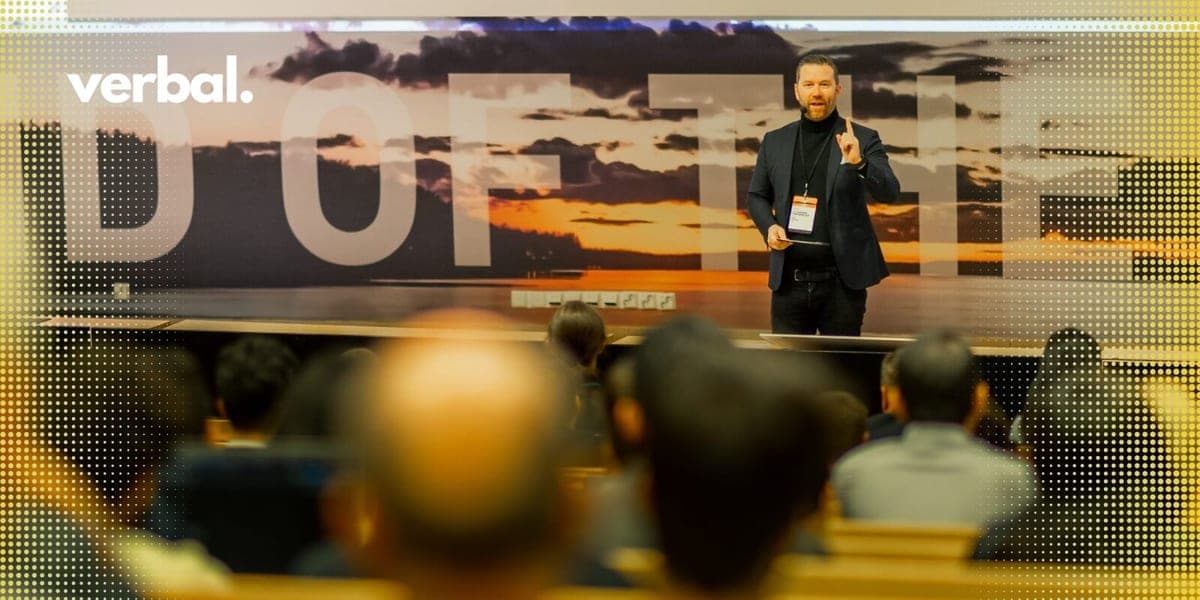
Watch a short video of Sakari’s presentation below:
Read next
The Listener's Handbook: How Advanced Listening Develops Thinking and Wisdom
Speakers get coached. Listeners almost never do. Here is how to get more from a keynote, lecture, or meeting — even when you disagree.
Read articleThe Listener's Handbook: How Advanced Listening Develops Thinking and Wisdom
Speakers get coached. Listeners almost never do. Here is how to get more from a keynote, lecture, or meeting — even when you disagree.
Read article